Only about 14% of drivers position their headrests correctly, according to observational studies. That small adjustment gap translates into hundreds of thousands of preventable neck injuries every year. Headrest injury prevention remains one of the most overlooked aspects of vehicle safety, yet it directly affects whether a rear-end collision leaves you sore for a few days or dealing with chronic pain for months.
If you're recovering from a crash and struggling with neck pain, stiffness, or other symptoms, a car accident lawyer may help you pursue fair compensation for your injuries and losses. But first, it helps to know exactly how this simple piece of equipment protects you, and why proper positioning matters so much.
Key Points About Headrest Safety and Whiplash Prevention
- Properly designed head restraints reduce neck injury claims by 11% and long-term injuries by 35%, compared to poorly rated systems.
- Rear-end collisions account for nearly 29% of all crashes in the U.S. and cause hundreds of thousands of whiplash injuries annually.
- Active head restraints, which move forward automatically during impact, reduce medium and long-term whiplash outcomes by up to 75%.
- Seeking prompt medical attention and legal guidance after a rear-end crash helps document injuries that may not appear immediately.
What Is a Headrest and Why Does It Matter?
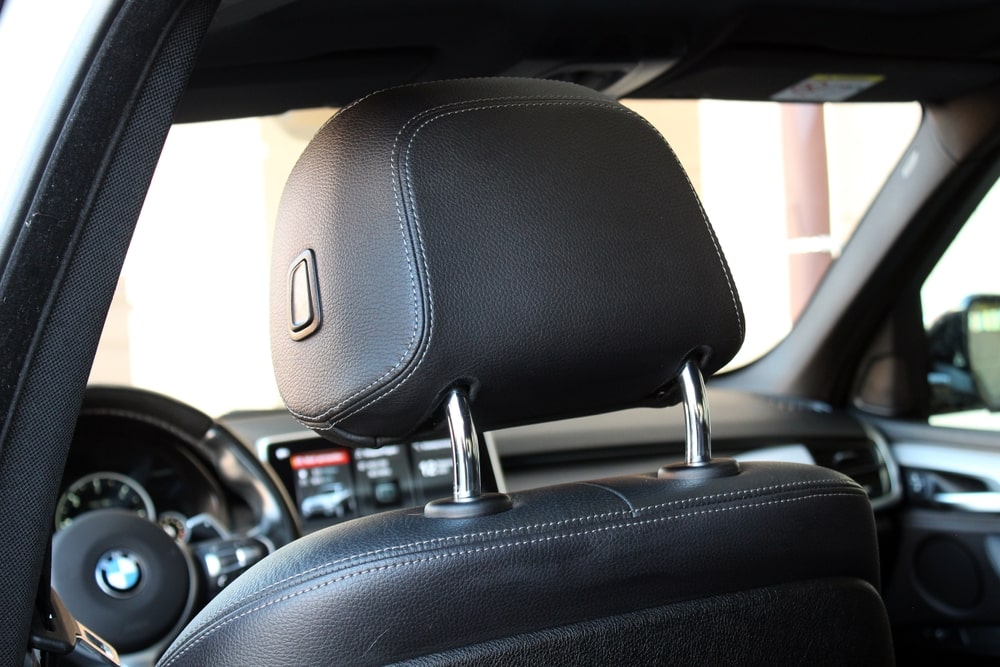
The headrest in your vehicle, technically called a head restraint, does far more than provide a comfortable place to lean back during long drives. It serves as a critical safety device designed to limit head movement during rear-end collisions, the crash type most likely to cause whiplash and other neck injuries.
According to the National Highway Traffic Safety Administration (NHTSA), rear-end collisions make up approximately 29% of all police-reported crashes. The Insurance Institute for Highway Safety (IIHS) has found that vehicles with good-rated seat and head restraint combinations reduce injury claim rates by 11% compared to those with poor ratings.
For long-term injuries lasting three months or more, that reduction jumps to 35%.
These differences aren't minor. They represent thousands of people who avoid chronic pain, missed work, and expensive medical treatment simply because their vehicle's head restraint performed as designed.
How Headrests Protect You During a Crash
When another vehicle strikes yours from behind, the impact forces your seat and body forward. Your head, however, initially stays in place due to inertia. This creates a dangerous whip-like motion where your neck bends backward rapidly before snapping forward.
A properly positioned headrest interrupts this sequence. Here's how the protection works:
- Limiting backward head movement. The restraint catches your head before it travels too far backward, preventing the hyperextension that damages neck muscles, ligaments, and vertebrae.
- Keeping head and torso moving together. The key to preventing whiplash is ensuring your head accelerates with your body rather than lagging behind. A close, high headrest accomplishes this by supporting the head almost immediately upon impact.
- Absorbing crash energy. Modern head restraints use foam and engineered structures that compress during impact, cushioning your head and reducing the forces transferred to your cervical spine.
The physics are straightforward, but the execution matters enormously. A headrest positioned too low catches the neck instead of the head, potentially worsening injuries. One positioned too far back allows excessive head travel before making contact.
Understanding Whiplash Injuries

Whiplash occurs when the neck undergoes rapid back-and-forth movement, straining or tearing the soft tissues that support the cervical spine. Despite its reputation as a minor injury, whiplash frequently causes lasting problems and easy relapses that cause persistent pain, limit motion, and disrupt work, sleep, and daily activities.
Common whiplash symptoms
Symptoms often appear hours or even days after a collision, which catches many crash victims off guard. Watch for these warning signs:
- Neck pain and stiffness that worsen with movement
- Reduced range of motion when turning your head
- Headaches that start at the base of the skull
- Pain or tenderness in the shoulders, upper back, or arms
- Tingling, numbness, or weakness radiating into the hands
- Dizziness or difficulty concentrating
- Sleep disruptions and fatigue
More severe cases may involve blurred vision, ringing in the ears, memory problems, or irritability. These symptoms suggest possible nerve involvement or concussion and require immediate medical evaluation.
Who faces the greatest risk?
Research consistently shows that certain factors increase whiplash vulnerability. Women experience neck injuries in rear crashes at higher rates than men, though scientists haven't fully explained why.
Front-seat occupants face a greater risk than those in back seats, likely because rear passengers often have more room between their heads and the seat behind them.
Crash severity obviously plays a role, but even low-speed impacts cause injuries. Studies confirm that collisions at just 5 to 10 miles per hour generate enough force to strain neck tissues, particularly when occupants don't see the impact coming and can't brace themselves.
How to Position Your Headrest Correctly
Proper headrest adjustment takes less than a minute but dramatically improves protection. Follow these guidelines every time you drive:
- Check the height first. The top of the headrest should align with the top of your head, or at minimum reach the top of your ears. A restraint that only reaches the back of your neck may actually increase injury risk by creating a pivot point.
- Minimize the gap. Position the headrest as close to the back of your head as comfortable, ideally within two inches. The IIHS recommends a distance of 2 to 7 centimeters (roughly 1 to 3 inches) for optimal protection.
- Adjust the angle if possible. Some vehicles allow you to tilt the headrest forward. A slight forward angle brings the restraint closer to your head without requiring you to sit uncomfortably upright.
- Verify after seat adjustments. Moving your seat forward or backward, or changing the recline angle, affects headrest positioning. Get in the habit of checking alignment whenever you adjust other seat settings.
Active Head Restraints: Advanced Protection Technology
Standard headrests rely entirely on correct positioning to work effectively. Active head restraints go further by responding dynamically to crash forces, moving forward and upward at the moment of impact to catch the head sooner and reduce neck strain.
Several systems have proven particularly effective in real-world crashes:
- Saab Active Head Restraint (SAHR). Uses a pressure plate in the seatback that detects when an occupant's torso loads the seat during rear impact, triggering the headrest to move forward automatically.
- Volvo Whiplash Protection System (WHIPS). Combines an active headrest with a specially designed seatback that reclines slightly during impact, cradling the occupant and allowing the head and torso to move together.
- Reactive head restraints. Found in many newer vehicles, these systems use mechanical linkages or pyrotechnic charges to deploy the headrest milliseconds after sensors detect a rear collision.
Research on these technologies shows impressive results. A study published in Accident Analysis & Prevention found that vehicles equipped with whiplash-reducing head restraint systems reduced whiplash injury odds by approximately 11.6% in real-world crashes. Earlier research on Saab's active system showed even more dramatic benefits, with medium and long-term whiplash outcomes reduced by 75%.
When shopping for a new vehicle, check whether it includes active head restraint technology. The IIHS publishes seat and head restraint ratings for most current models, making it easy to compare safety performance before you buy.
Why Rear-Seat Passengers Need Protection Too
Most head restraint safety discussions focus on front-seat occupants, but rear passengers face whiplash risks as well. Children and adults riding in back seats experience the same crash forces, yet rear head restraints historically received less engineering attention.
Federal Motor Vehicle Safety Standard 202, administered by NHTSA, requires head restraints in front outboard seating positions but doesn't mandate them for rear seats. Many manufacturers now include rear head restraints voluntarily, though quality varies significantly.
If your vehicle has adjustable rear headrests, take time to position them correctly for passengers. If the restraints are fixed or integrated into the seatback, verify they're tall enough to protect the heads of whoever typically rides there. This matters especially for:
- Taller passengers whose heads may sit above fixed or low-profile rear headrests
- Carpool passengers unfamiliar with your vehicle's safety features
- Elderly family members, who may be more vulnerable to neck injuries
The Role of Headrests in Accident Claims

Beyond protecting your health, proper headrest use may affect your ability to recover compensation after a car crash. Insurance adjusters and defense attorneys sometimes scrutinize injury claims involving whiplash, looking for reasons to minimize payouts.
Documentation becomes critical. If you suffer neck injuries in a rear-end collision, your medical records, the police report, and even photographs of your vehicle's interior may become evidence. Questions that sometimes arise include:
- Was the headrest positioned correctly at the time of impact?
- Did the vehicle's head restraint system function as designed?
- Were the injuries consistent with the crash dynamics and safety equipment involved?
None of this means you're responsible for preventing injuries caused by another driver's negligence. However, understanding how headrests work and ensuring yours is properly adjusted can strengthen your position if you ever need to pursue a claim.
Practical Safety Habits for Every Driver
Headrest adjustment is just one element of occupant protection. Build these habits into your routine to maximize your safety in any collision:
Before every trip:
- Confirm your headrest height and distance
- Adjust mirrors to minimize blind spots
- Ensure all passengers have buckled their seatbelts
While driving:
- Maintain safe following distances to give yourself reaction time
- Stay alert at intersections and stop signs, where rear-end crashes commonly occur
- Check your rearview mirror when slowing or stopping to anticipate vehicles approaching too quickly
After any collision:
- Seek medical evaluation even if you feel fine initially, since whiplash symptoms often appear days later
- Contact a personal injury attorney before accepting any settlement offers from insurance companies
- Keep all medical treatments and follow-ups. Skipping them creates gaps in your medical records that insurance companies may use to challenge your claim.
- Gather and preserve any photos, videos, documents, damaged property, and other items that may serve as evidence from your car accident.
- Keep a written or video recovery journal that shows how your injuries affect your daily life. Doing this supports your claim for pain and suffering.
- Avoid negotiating with insurance adjusters. Refer them to your lawyer to strengthen your outcome.
Frequently Asked Questions about Headrest Injury Prevention
Do headrests actually prevent injuries, or are they mainly for comfort?
Headrests serve a genuine safety function backed by decades of crash research. The IIHS has documented that vehicles with good-rated head restraints reduce neck injury claims significantly. While headrests do provide comfort during normal driving, their primary purpose is to protect your cervical spine in rear-end collisions.
What happens if my headrest is too low during a crash?
A headrest positioned below the back of your head may actually worsen injuries by creating a fulcrum point. Instead of supporting your head and limiting backward movement, the low restraint catches your neck, increasing the bending forces on your cervical spine. This can lead to more severe hyperextension injuries than having no headrest at all.
Are aftermarket headrests as safe as factory-installed ones?
Aftermarket headrests vary widely in quality and may not meet federal safety standards. If you replace your vehicle's original head restraints, choose products that comply with FMVSS 202 requirements and fit your specific vehicle model. Poorly designed aftermarket headrests may detach during impact or fail to provide adequate support, leaving you vulnerable to injury.
How do I know if my vehicle has active head restraints?
Check your owner's manual or search your vehicle's make, model, and year on the IIHS website. Active head restraint systems are typically listed as safety features in vehicle specifications. You may also notice that the headrest has more mechanical components than a simple padded cushion, though this isn't always visible from the outside.
Should I see a doctor after a rear-end collision even if I feel okay?
Yes. Whiplash symptoms frequently take hours or days to develop as inflammation builds in damaged soft tissues. Adrenaline from the crash can also mask pain initially. Prompt medical evaluation creates documentation linking your injuries to the collision and ensures you receive appropriate treatment before minor strains become chronic problems.
Protecting Your Health and Your Rights After a Crash

A properly adjusted headrest significantly reduces your risk of whiplash and other neck injuries in rear-end collisions. But even with the best safety equipment, crashes caused by distracted, impaired, or reckless drivers still happen, and the injuries that result can affect your life for months or years.
If you've been hurt in a collision in Federal Way, Bellevue, Tacoma, or anywhere in the Puget Sound region, Ye Law Firm Injury Lawyers is ready to help you pursue full and fair compensation for your injuries.
Attorney Chong Ye understands what injured clients face because he watched his own parents struggle after receiving inadequate legal representation following a car accident. That experience drives his commitment to treating every client with respect, transparency, and genuine care.
You pay nothing unless your case succeeds. Call (253) 946-0577 today for a free, no-obligation consultation, or reach out online. Legal services are available in English, Korean, and Spanish.