After suffering injuries in a car accident caused by a negligent driver, you may not learn all the details of the crash until you receive the police report days later. You scan the document for answers, only to find a confusing discrepancy: the driver who caused the crash is not the vehicle's registered owner.
This raises important questions about coverage for your mounting hospital bills. If this driver doesn't own the car, whose insurance company pays for your medical bills? Do you file a claim against the person behind the wheel, or do you sue the vehicle’s owner?
Determining who is liable, the car owner or driver, is rarely straightforward in these situations. Insurance companies often point fingers at each other to avoid paying, leaving you in financial limbo. A dedicated car accident lawyer can cut through this confusion, identifying every available insurance policy and giving you the best chances of obtaining full and fair compensation.
Key Takeaways: When Liability for a Car Accident Isn’t Clear
- Washington generally follows the "insurance follows the car" rule, meaning the owner's policy is the primary coverage.
- Car owners can be held personally liable for damages if they knowingly loan their vehicle to an unfit or intoxicated driver.
- The Family Car Doctrine in Washington holds parents responsible for accidents caused by their children while driving a family vehicle.
- Employers are often vicariously liable for accidents caused by employees while they are on the clock.
- If a vehicle is stolen, the owner is typically not responsible for the thief's actions, but "joyriding" by friends is a gray area.
The General Rule: Insurance Follows the Car
The most important concept to grasp in these cases is that auto insurance is tied to the vehicle, not just the person. If you lend your car to a friend to pick up groceries in Tacoma, you are essentially lending them your insurance policy, too.
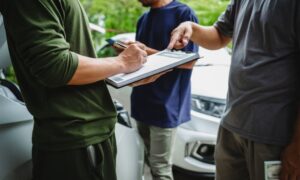
When a borrower causes a crash, the car owner's liability coverage pays for the victim's damages first. The driver's own insurance may provide secondary coverage if the damages exceed the owner's policy limits. Therefore, in most standard scenarios involving "permissive use," the car owner's insurance carrier writes the check.
However, relying solely on this general rule can be dangerous. Insurance companies often look for loopholes to deny coverage, claiming the driver did not have permission or was excluded from the policy. Establishing clear permission is the first step in securing your recovery.
What Is Permissive Use?
For the owner's insurance to apply, the driver must have had "permissive use" of the vehicle. This permission can be express (verbal or written) or implied (based on past behavior or relationship).
Disputes over permission often arise when:
- The driver deviates from instructions
The owner said, "Go straight to the store and back," but the driver took a detour to a party in Seattle and crashed. - The driver is an excluded operator
Some policies specifically list certain household members (like a teen with a bad record) as excluded. If they drive anyway, coverage is denied. - The permission was expired
A friend borrowed the car for the weekend but kept it for a week without asking.
If the insurance company successfully argues that the driver did not have permission, the owner's policy closes its checkbook. In that scenario, you must look to the driver's personal insurance or your own Uninsured Motorist coverage.
When Is the Car Owner Personally Negligent?
While insurance usually pays, there are times when the car owner is personally sued for their own negligence. This happens when the act of lending the car was, in itself, a dangerous decision. This legal concept is known as negligent entrustment.
To prove this, your case must show that the owner knew, or should have known, that the driver was incompetent or reckless but gave them the keys anyway.
Lending to an intoxicated driver
If a car owner hands their keys to a friend who is visibly stumbling or slurring their words outside a bar in Bellevue, the owner is liable for the resulting DUI crash. A reasonable person would know that the driver was unfit to operate a vehicle.
Lending to an unlicensed or inexperienced driver
Allowing someone without a valid license to drive is a form of negligence. This includes letting an unlicensed teenager take the car on the freeway or allowing someone with a suspended license to run errands. The owner assumes the risk of the driver's lack of skill.
Ignoring a history of reckless driving
If an owner knows their friend has a history of road rage or multiple at-fault accidents , lending them a vehicle is a negligent act. By enabling a known danger to get back on the road, the owner shares the blame for the harm that follows.
Proving negligent entrustment allows you to sue the owner directly, potentially accessing their personal assets if insurance limits are insufficient.
What is Washington's Family Car Doctrine?
Washington State has a specific law that affects parents and guardians. Under the Family Car Doctrine, the head of the household who owns or maintains a vehicle for the general use of the family is liable for the negligence of any family member using it.
This means if a teenager causes a serious accident while driving to high school or soccer practice, the parents are on the hook. The victim does not need to prove negligent entrustment (that the teen was a bad driver). They simply need to prove:
- The parent owned or controlled the car.
- The car was provided for family use.
- The child was using it with express or implied permission.
This doctrine prevents parents from hiding behind the argument that "my child is an adult at 18, so don't sue me," ensuring victims have a source of recovery for their losses.
Employer Liability for Employee Accidents
If you are hit by a delivery driver, a sales representative, or a technician in a company van, the rules of liability shift toward the employer. Under the legal principle of respondeat superior, an employer is responsible for the actions of their employees performed within the scope of their job.
This concept, often called vicarious liability, is vital because companies usually carry much higher insurance limits than individuals.
- Scope of employment
The accident must happen while the employee is performing job duties, such as making a delivery or driving to a client meeting. - Frolic and detour
If the employee goes off-route to handle personal business (like stopping at a bank two towns over) and crashes, the employer might argue they are not liable. - Independent contractors
Companies often try to classify drivers as contractors to avoid liability. A lawyer may challenge this classification to hold the company accountable.
Identifying the employer and proving the driver was "on the clock" is a powerful way to secure full compensation for catastrophic injuries.
Can You Sue if the Car Was Stolen?
Generally, a car owner is not liable if a thief steals their car and causes an accident. The law does not hold people responsible for the criminal acts of strangers. In these cases, the owner's insurance will not pay for your injuries, and the thief likely has no insurance or assets.
However, there are exceptions regarding "constructive permission." If the owner left the car running with the keys in the ignition in a high-crime area, some courts might find the owner partially negligent for creating a foreseeable risk. These cases are difficult to win and require a thorough investigation by a legal professional.
Why Suing the Owner Matters for Your Claim
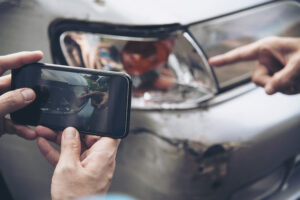
You might wonder why it matters who pays, as long as you get paid. The reality is that the driver who hit you might have the state minimum insurance ($25,000 in Washington) or no insurance at all. If your hospital bills exceed that amount, you need another source of funds.
Holding the owner liable expands your options:
- Accessing higher policy limits
Car owners, especially parents or businesses, often carry better insurance policies than young or transient drivers. - Triggering umbrella policies
Wealthier vehicle owners may have umbrella coverage that pays out only after the underlying auto policy is exhausted. - Ensuring accountability
Negligent entrustment laws exist to discourage people from enabling dangerous drivers. Filing a car accident claim enforces safety in the community.
Evidence Needed to Prove Owner Liability
Connecting the owner to the accident requires more than just the police report. You need car accident evidence that proves permission, knowledge, or employment status. We start gathering this information immediately.
We look for:
- Text messages and emails between the owner and driver discussing the use of the car.
- Employment records and time cards to prove the driver was working.
- Driving records to show the owner should have known the driver was unsafe.
- Social media posts showing the driver frequently using the vehicle, establishing implied permission.
Building this evidentiary link prevents the owner from washing their hands of the situation.
FAQs About Car Owner Liability in Washington
Does my insurance cover me if I drive someone else's car?
Yes, typically your own car insurance acts as secondary coverage when you drive a borrowed car. If you cause an accident and the damages exceed the car owner's policy limits, your liability coverage may kick in to pay the difference. Always check your specific policy language for exclusions regarding non-owned vehicles.
What happens if the car owner says they didn't give permission?
This is a common defense called "non-permissive use." If the owner proves the car was taken without consent, their insurance will deny the claim. However, if your lawyer can prove a pattern of past usage (implied permission), you can often defeat this defense.
Can I sue a rental car company when a driver hits me?
Generally, no. A federal law known as the Graves Amendment protects rental car companies from vicarious liability for their customers' negligence. You would sue the driver and use their personal insurance or the supplemental insurance they purchased from the rental agency.
What is the "omnibus clause" in car insurance?
The omnibus clause is a provision in most auto insurance policies that extends coverage to any person using the insured vehicle with the named insured's permission. This clause creates the legal basis for the "insurance follows the car" rule.
Who pays the deductible in a borrowed car accident?
If the car is damaged, the car owner is responsible for paying their own deductible to get it repaired after a car accident. They may ask the driver to reimburse them, but that is a personal matter between them. As the victim of the crash, you do not pay a deductible to get your own medical bills covered by their liability insurance.
Is a co-signer on a car loan liable for an accident?
Liability typically attaches to the registered owner of the vehicle, not just the person who signed the financial loan documents. However, if the co-signer’s name also appears on the vehicle's title, they are considered a legal owner. In that case, they could be held liable under the Family Car Doctrine or negligent entrustment theories, putting their personal assets at risk.
What if the car owner has no insurance?
If the vehicle owner allowed their policy to lapse, the general rule that "insurance follows the car" cannot apply. In this specific scenario, the driver’s personal auto insurance policy usually steps in to become the primary coverage. If neither the owner nor the driver has valid insurance, you must rely on your own Uninsured Motorist (UM) coverage to pay for your injuries.
Ye Law Firm Injury Lawyers: We Fight for the Justice You Need

Rear-end collisions or T-bone crashes involving borrowed cars can turn your life upside down. You shouldn't have to decipher insurance contracts while you are recovering from surgery. Attorney Chong Ye became a personal injury lawyer after witnessing his immigrant parents suffer through a car accident where their attorneys treated them with indifference and failed to explain the process.
Determined to provide a better experience, Chong left a ten-year career as a pastor to become an attorney who truly serves his community. At Ye Law Firm Injury Lawyers, we combine that pastoral compassion with the tenacity of a trial lawyer. We ensure you are heard, respected, and empowered to regain control of your future. Call us or contact us online today for a free consultation. We speak English, Korean, and Spanish.